


It is a small marvel to be able to press a button and have steaming hot spring water pour into your own private bath. The bath itself is no ordinary bath, either: It’s a more-than-person-sized rectangular bamboo bathtub, big enough to fit my whole 5-foot 6-inch frame with my legs stretched out straight, and my body covered up to my neck, with my head leaning against the head-shaped rest on the back side of the tub. It’s like laying in bed, except you’re in the bath.
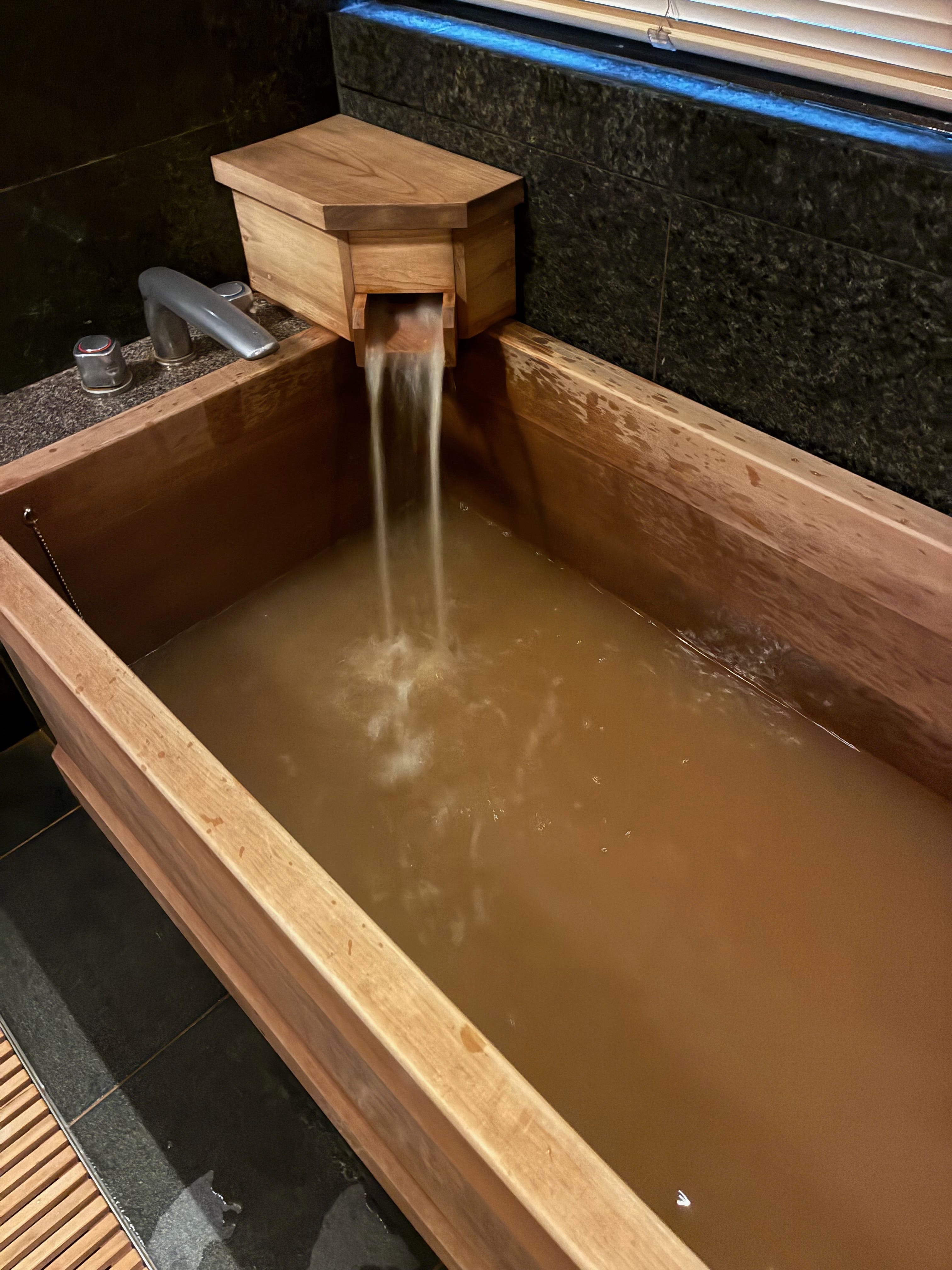
Arima Onsen has two types of water: gold and silver. The water in this bath, in this ryokan, is of the gold type. The gold water is such because it has so much iron in it that it rusts on contact with the air, turning it a rich golden brown that looks a bit like a pool of stagnant quarry water… let’s be real, it’s ugly. But plain clear water doesn’t look like it has healing magic. Weird golden brown quarry swamp water? Yeah, there might be magical properties there.
Once the button is pressed, you’re in the hardest part: waiting for the tub to fill up.
I dipped a toe or two in at the halfway mark, and the water felt so hot I yelped. I turned on the regular cold water tap and swished it in, but also felt a moment of recognition that part of this experience, perhaps an essential part, was going to be lowering myself into that steaming hot bath, and that before it (potentially, as I didn’t really know!) felt good, it was going to hurt.
I looped a leg over the high side of the tub and slid it into the steaming water, letting the prickle of the heat sting me as I pulled my second leg in and crouched, hovering over the rising water and feeling the pain, tuning into it, letting myself adjust.
The next step had to happen all at once; there was no other way. I lowered my bum, slowly, carefully, and then all at once, to the bottom of the bath. I sat, letting the searing heat of the water soak into my skin.
I waited, and I breathed. Deeply, in and out, trying to handle the pain of the heat, letting my body adjust. I slid deeper into the tub, slipping down to cover my whole body with the golden (seriously, let’s be real here: it’s brown) hot water.
My skin prickled with the heat, but as I adjusted and sank down into a full length laying position, with my head resting against the back of the tub, I felt the loosening. The tension in my muscles melted. The ever-running, ever-shouting blurring-together thoughts, worries, mental pains — everything — in my head wafted out, disappearing with the slow burn of the water.
My eyes closed. I drifted off without realizing, coming to suddenly, laughing with surprise. I’m not much of a bath person. I’ve never fallen asleep in a bath before. But this was not like other baths.
In the morning, I woke early and ran the bath a third time before breakfast.
I pressed the button, as before, more impatient than before, waiting for the rushing hot water to rise and rise in the tub. It was only halfway full by the time I climbed in. I sat, with my knees up, breathing, trying to handle the pain, trying to adjust to the heat of the water.
I couldn’t adjust. My chest felt bound in tiny rubber bands. The spaces in my wrists hurt. My knuckles ached.
I lay down, briefly, only to get back up again — with a feeling like a deep cavity opening up in my chest, beneath my lungs, around my heart, turning my skin inside out and leaving my organs outside my body, shriveling, peeling, brushing against the air, exposed to the grief.
I broke into soul-wracking sobs. My body shook with it.
It was the end of November, the weekend of Thanksgiving, and instead of being cozy at home in our (my) beautiful apartment with the southwest-facing 12-foot ceilings and the man I loved cooking up a whole chicken in the kitchen, I was alone in Japan, and my (our) beautiful apartment was empty of him and his things.
Anxiety spiked in me, flooding my system with tension and panic. How do you sit with grief like this, being yanked out of you, the water pulling, pulling, pulling… dragging it out and holding it at the surface? What can you do in the face of that?
I couldn’t resist: I had to reach out. I had to tell him I missed him. So much. He responded immediately. But the things he said… it was clear his head was elsewhere. It was clear his head had been elsewhere.
I collected my organs, stuffed them back inside, picked myself up and packed myself out to my next stay in Nagoya.
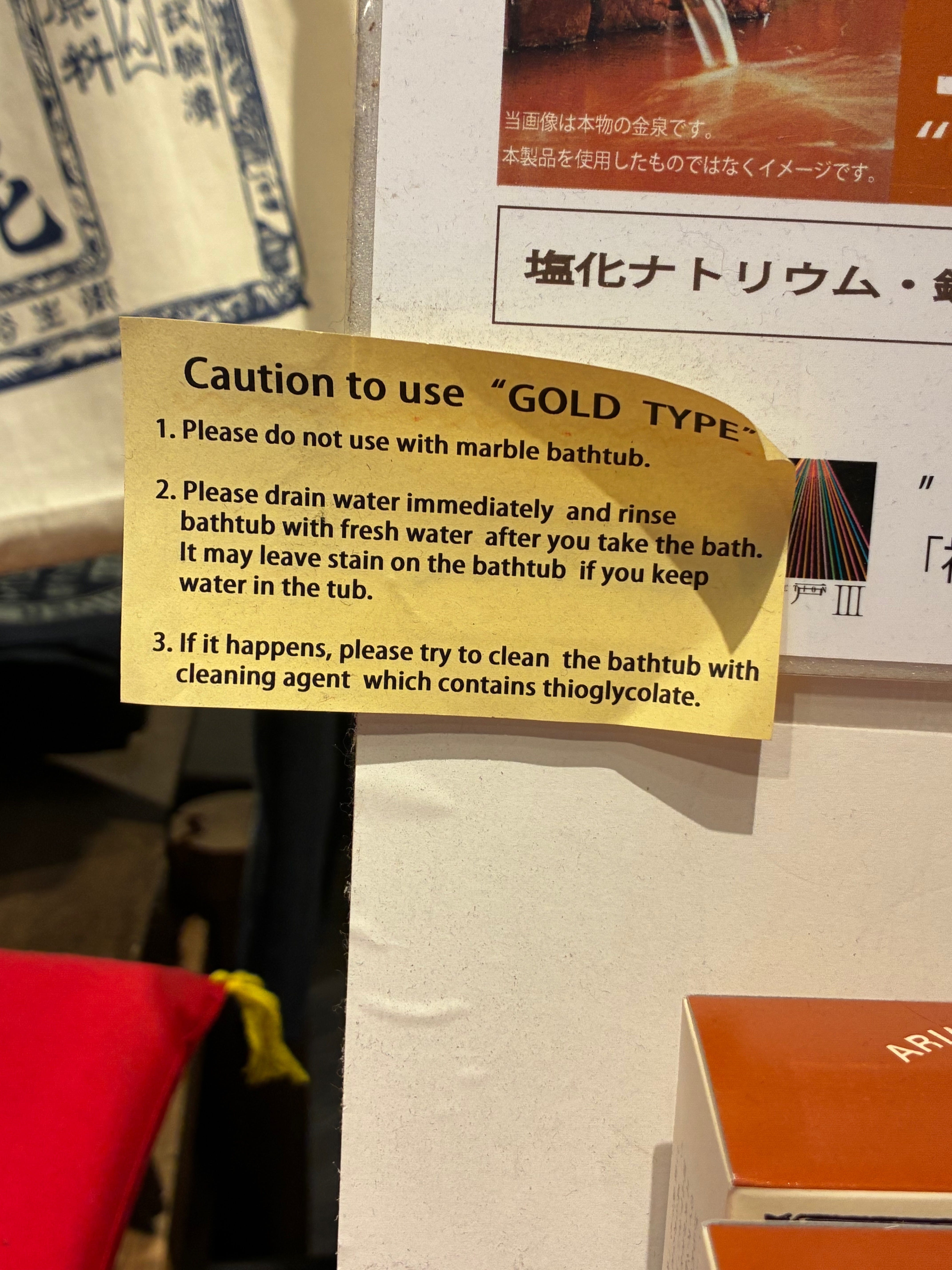
When I returned home six weeks later, I unpacked my treasures of Japan. I had brought home two boxes of bath salts from Arima Onsen. These salts are said to be made from the actual hot spring waters. Skeptical, I set out to find out if at home they would feel anything like they had in the wild.
I tried the gold first, then the silver, and the gold again. It was in this third bath at home, in the gold water, that I noticed: it was happening again. The gold water wrung me out. It dug up all the tension and hard emotion living under my skin and pulled at it, turning me inside out. It was more relaxing, ultimately, with some kind of deeper relief, but it also hurt. It hurt a lot.
The silver water felt lighter, more peaceful, more like the fuzz on a peach. It loosened and lightened, but without the wrenching harshness of the gold water.
I found myself wondering if there was anything real behind the difference I felt — so I looked it up.
I was disappointed that I couldn’t find real, hard facts to back up my theory, only some vague anecdotal and AI-generated notes that said the gold spring was considered more intense and the silver more relaxing. It sometimes feels like it’s hard to go deep into anything in Japan, as their culture and language just don’t go there (or don’t reveal their secrets to foreigners, anyway…)
What I did learn was that the gold spring (known as Kinsen, from kin, the word for gold in Japanese) contains high levels of not just iron but also salt, significantly more concentrated than seawater. This could account for the feeling of the water pulling at me that I experienced; it does help remove dead skin cells and pull impurities from pores.
The ryokans in the area report that the gold spring also has heat retention properties; after bathing, your body stays warm for a long time and doesn’t cool down easily.
In contrast, the silver water (Ginsen, from gin (sounds like geen), the word for silver) contains radium and carbonate. It’s recommended for soothing joint aches, boosting blood flow, and clearing lactic acid — more of a circulation aid, getting things moving. The Japanese even drink it for health, in the form of Arima cider (I didn’t try one).
I cried again in both waters. It’s an incredible thing, bath water that feels like a transformation. But mostly, when moving through grief, you might want a bath salt that doesn’t leave you with your organs hanging out. So I decided to leave the gold for a time in the future when I have a little more strength.
For now, I’ll reach for the silver waters of Arima Onsen when I want my calm evening bath.