


Pity me that the heart is slow to learn
What the swift mind beholds at every turn.
~Edna St. Vincent Millay
Her friends called her Vincent.
Others called her genius, sprite, gamin, mercurial. She was a chanteuse (for what is a really good poet if not a singer of songs?) and a Byronic lover. She had a cheeky, smart-as-a-whip sense-of-life. Just read a poem or two… or a hundred, as you won’t be able to stop once you start. You’ll see what I love about her, I know. She charms everyone who reads her.
She’s been my favorite poet since I first read her, in high school or college. Those cheeky turnabouts at the end of her poems get me every time, whether they are know-it-all sassy or powerfully sad in their romantic desolation.
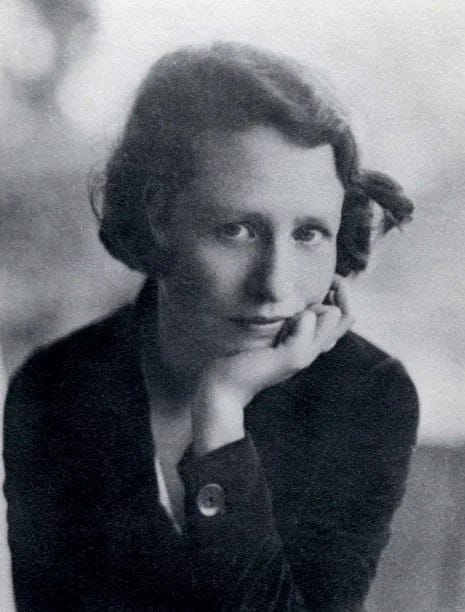
For about the last 25 years of both their lives, Millay and her husband Eugen Bossevain lived in a house on 800 acres in Austerlitz, New York. They named it Steepletop, after a flower called “steeplebush” that grows in abundance on the property.
First Eugen (in 1949) and then Millay died there (the following year), and Millay’s sister Norma kept the house and grounds almost entirely as they were during Millay’s life.
At the time I first learned of Steepletop’s existence, it was closed to the public. They had run out of funds and couldn’t afford to open as a museum anymore. But I put the place on my list of places to go, got on their email list and waited.
Three years later, I received an email in the spring that said they would be opening for one day only in July. I took off work and started planning immediately.
Austerlitz is just across the border between New York and Massachusetts, and so I chose to stay in Great Barrington. Starting with the day at Steepletop as the centerpiece, I quickly realized there was a wealth of other Heartbeat places in the area. Nearby Stockbridge is home to Chesterwood, sculptor Daniel Chester French’s home and studio. Naumkeag, also in Stockbridge, is a Gilded Age estate that served as a summer home to a NYC attorney and his artist wife. Amherst, just over an hour’s drive away, features the Eric Carle Museum of Picture Book Art and Emily Dickinson’s house, and rounded out the perfect Heartbeat-driven trip.
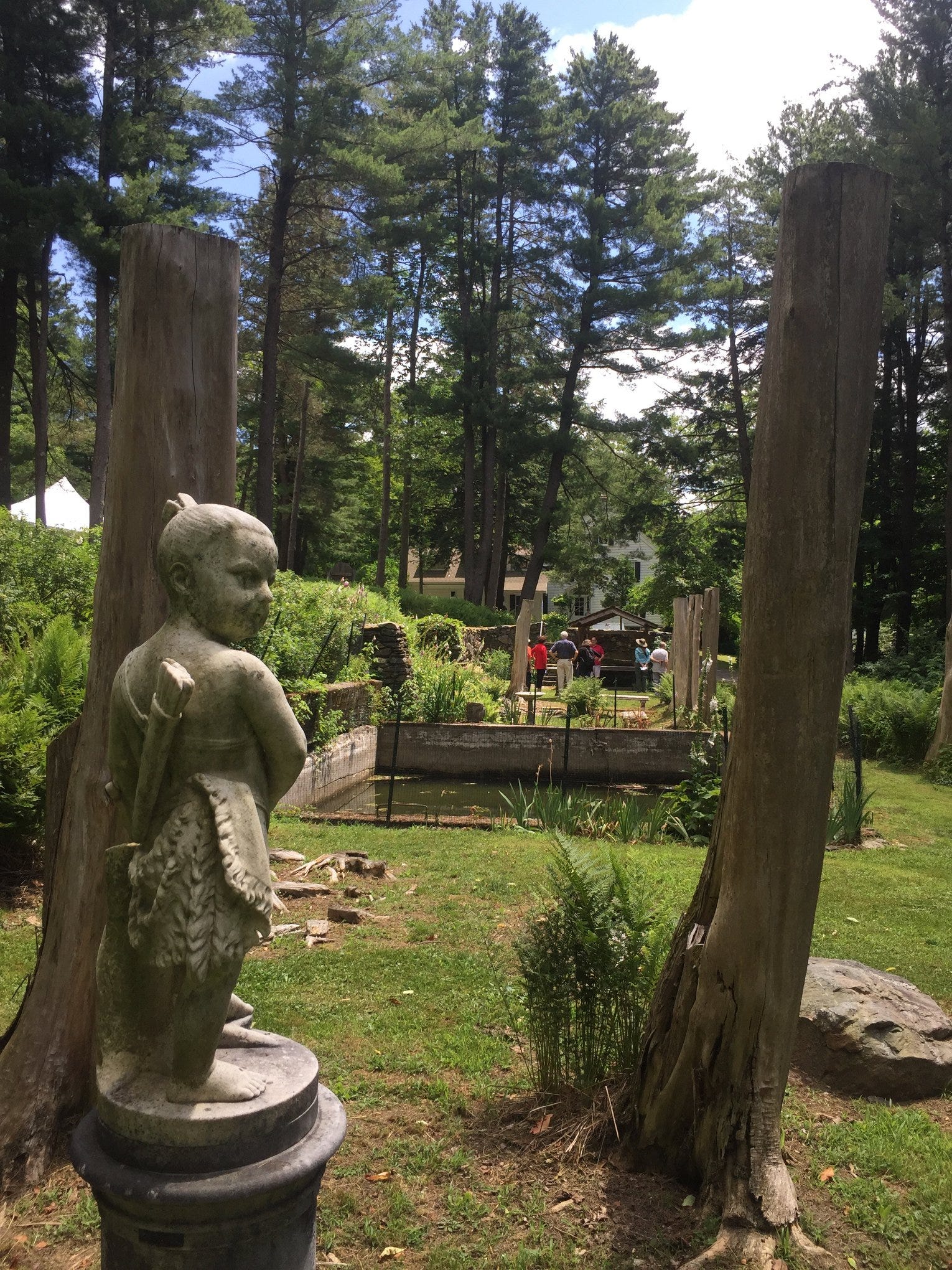
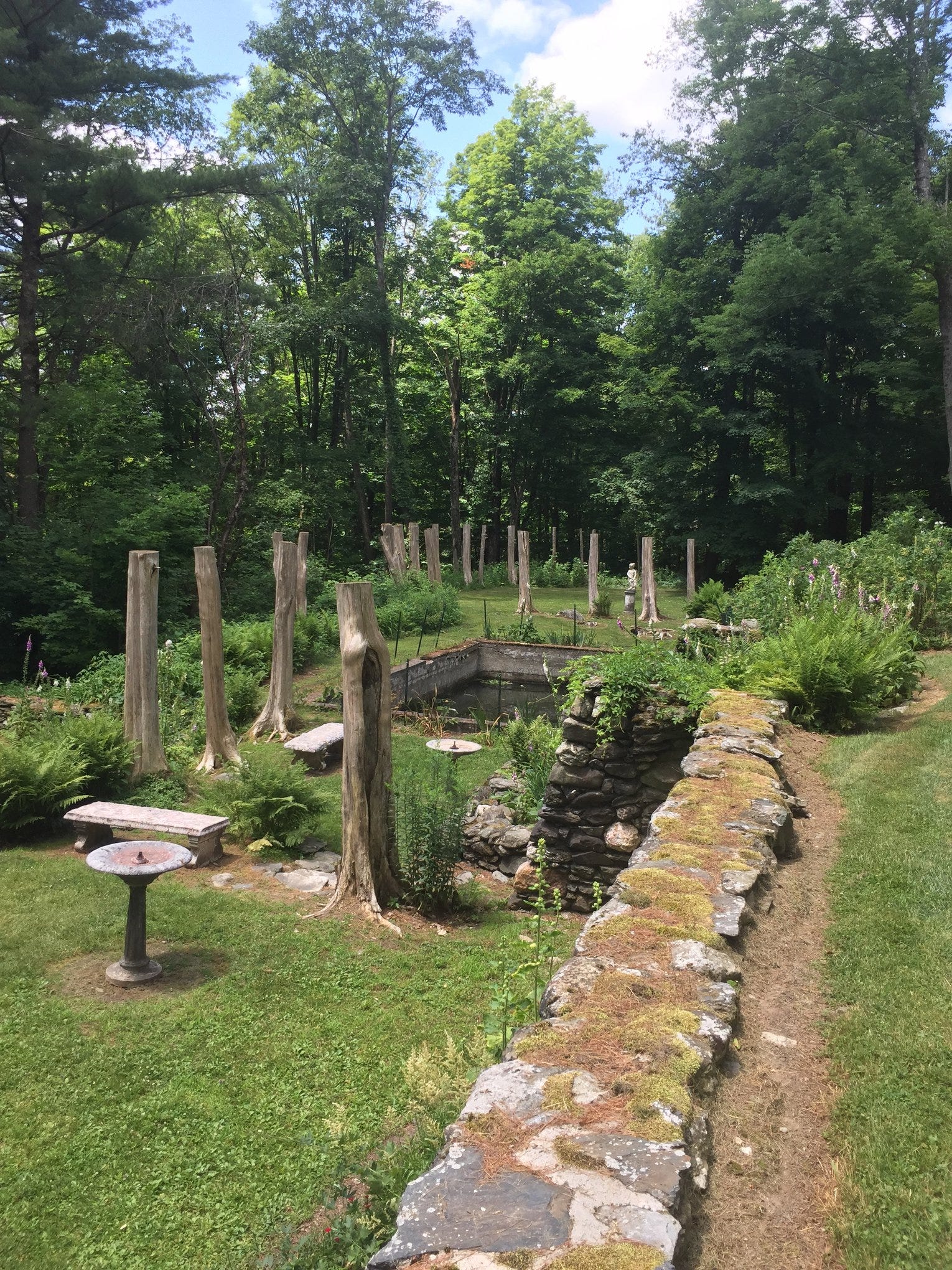
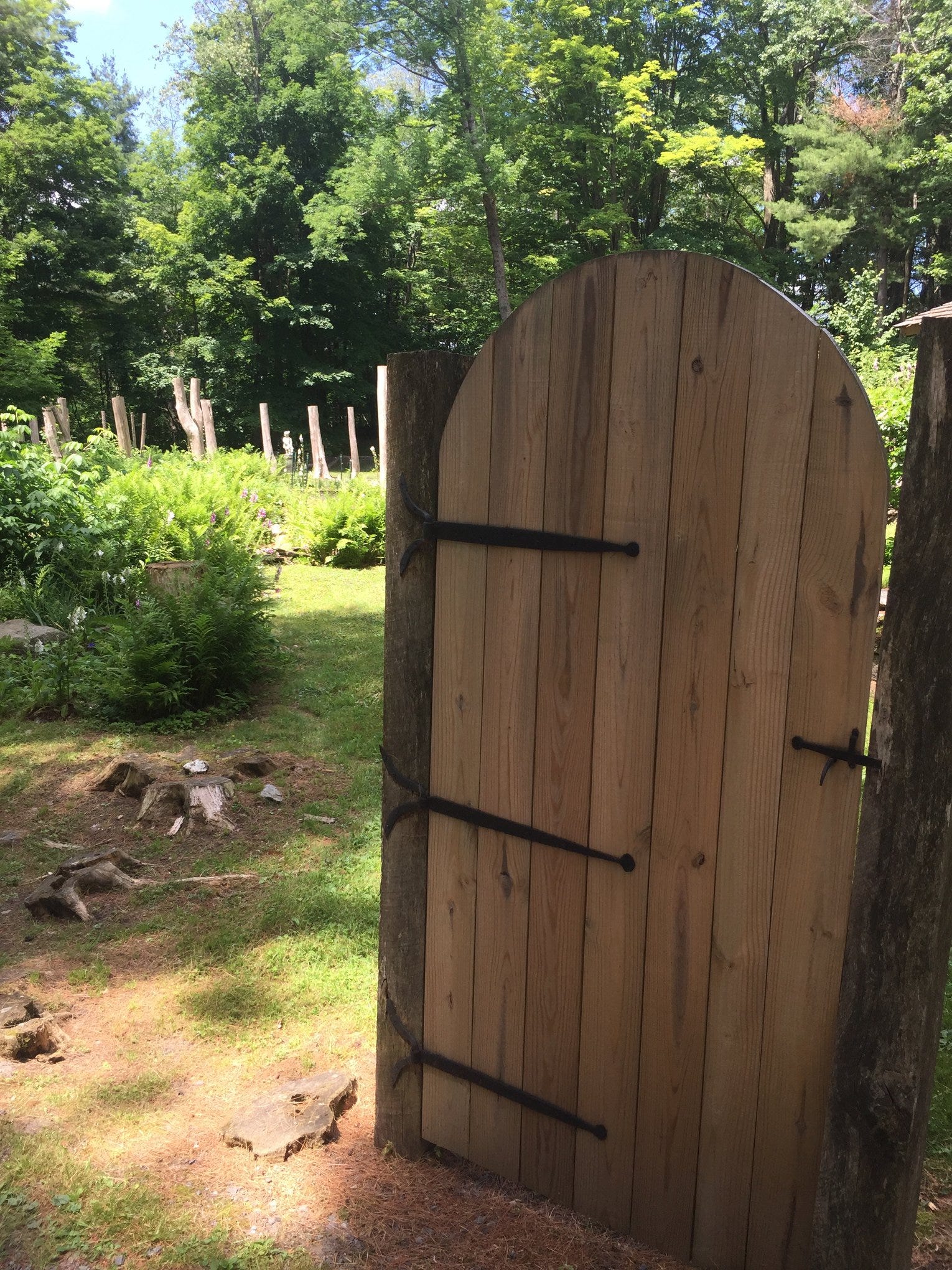
The weather on the day I visited Steepletop was perfect, warm and sunny. The first thing you notice, when walking up the hill, is what Vincent called “The Ruins” — a strange, whimsical garden with a door that leads to nowhere (there are three of these in the grounds near the house), an almost ritualistic planting of trees, and one small statue of a boy. The pool is the centerpiece — where clothes were never allowed if you wanted to go swimming. (Eugen generally wore just his hiking shorts most of the time in warm weather anyhow.) And, of course, there would have been the bar — beneath a renovated pergola, it no longer exists, but was taken from a New York speakeasy to be the home of Vincent’s ever-flowing gin habit.
Inside the house, you begin to get a sense of the real Vincent, the working Vincent. The tour guide laughed with us as we peeked first in the kitchen — it’s said that Vincent never set foot in it. Eugen was the cook of the household.
Upstairs you find first the working room and then the library. The working room was for organizational editing (like figuring out what order the poems should go in for the book) and proof corrections. The library was for reading and researching.
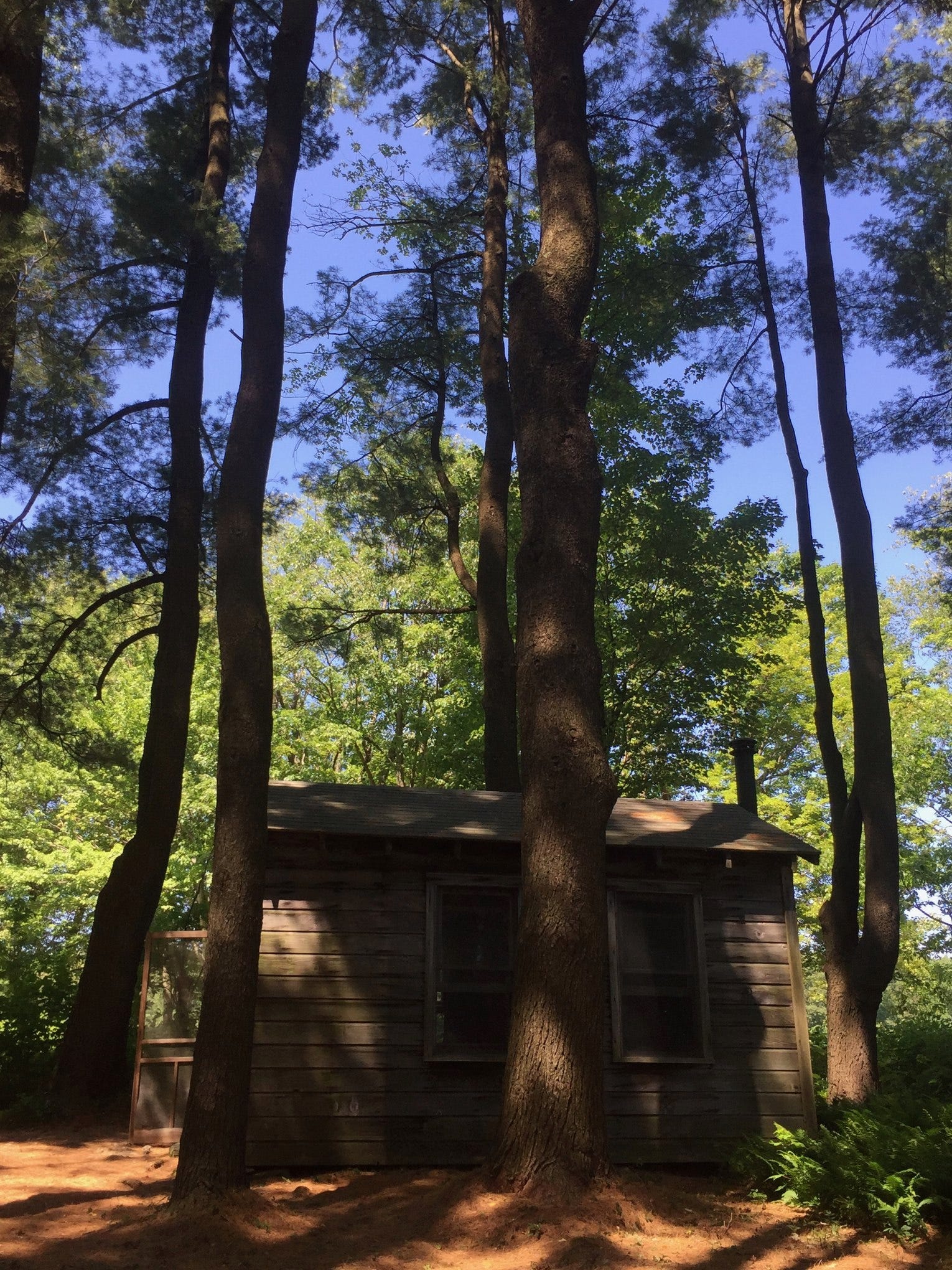
The writing itself? That took place in a small cabin approximately thirty steps up the hill from the house, with nothing in it but a desk and a potbelly stove and a view of the woods. A place for every stage of the writing process! Not just the dream of me-the-writer, but also the dream of me-the-persnickety-get-all-the-details-right-experience-maker.
Back outside, you’ll also find a flat plain Vincent called “The Dingle,” which was the site of a badminton court in 1935, and scores of blueberry bushes. (When they purchased the land, it had been a blueberry farm! We picked a few and ate them, as they were just in season, and I’m sure Vincent wouldn’t have minded.) Footage from a 35mm film made at Steepletop showed goats and sheep as well.

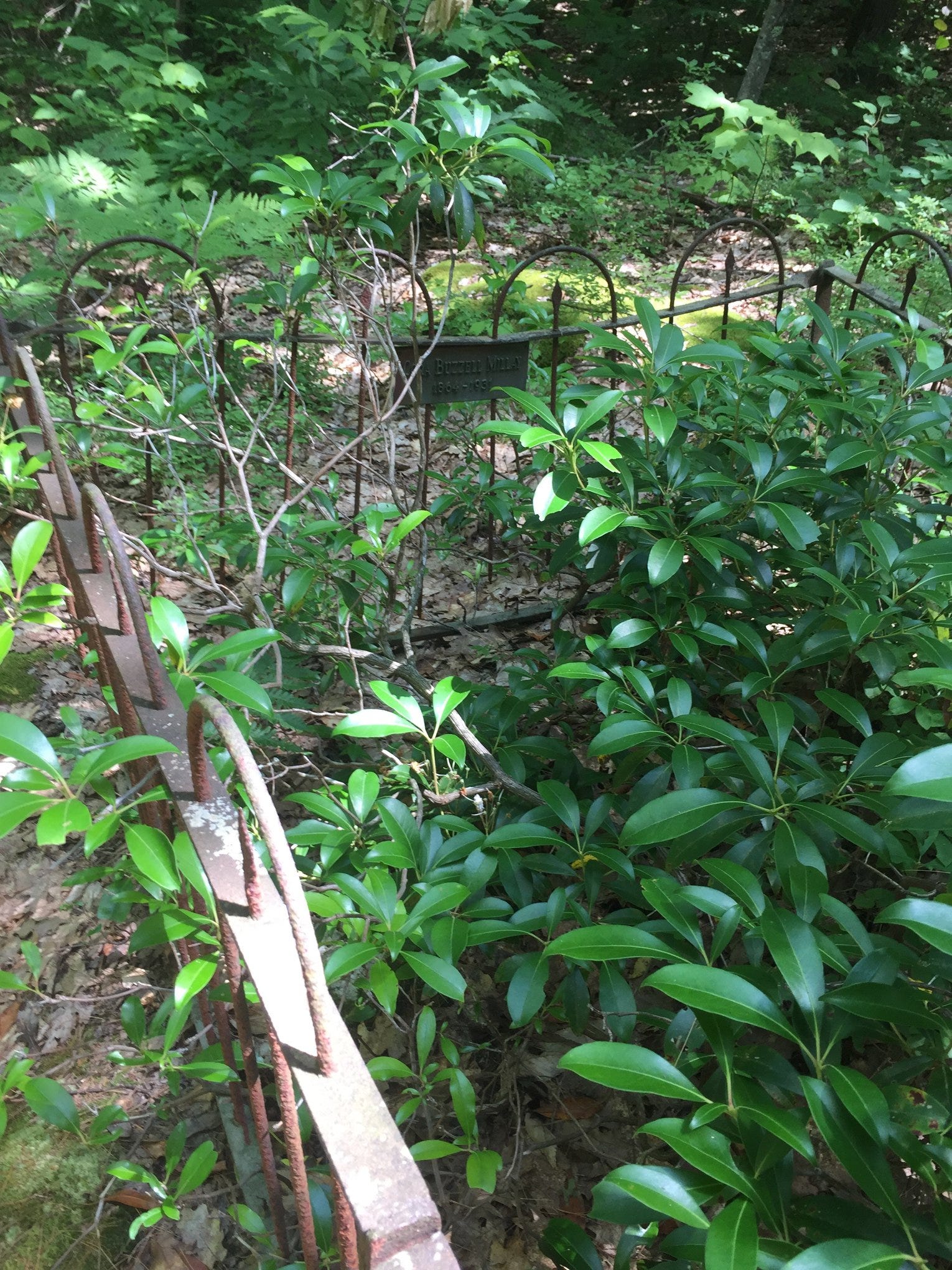
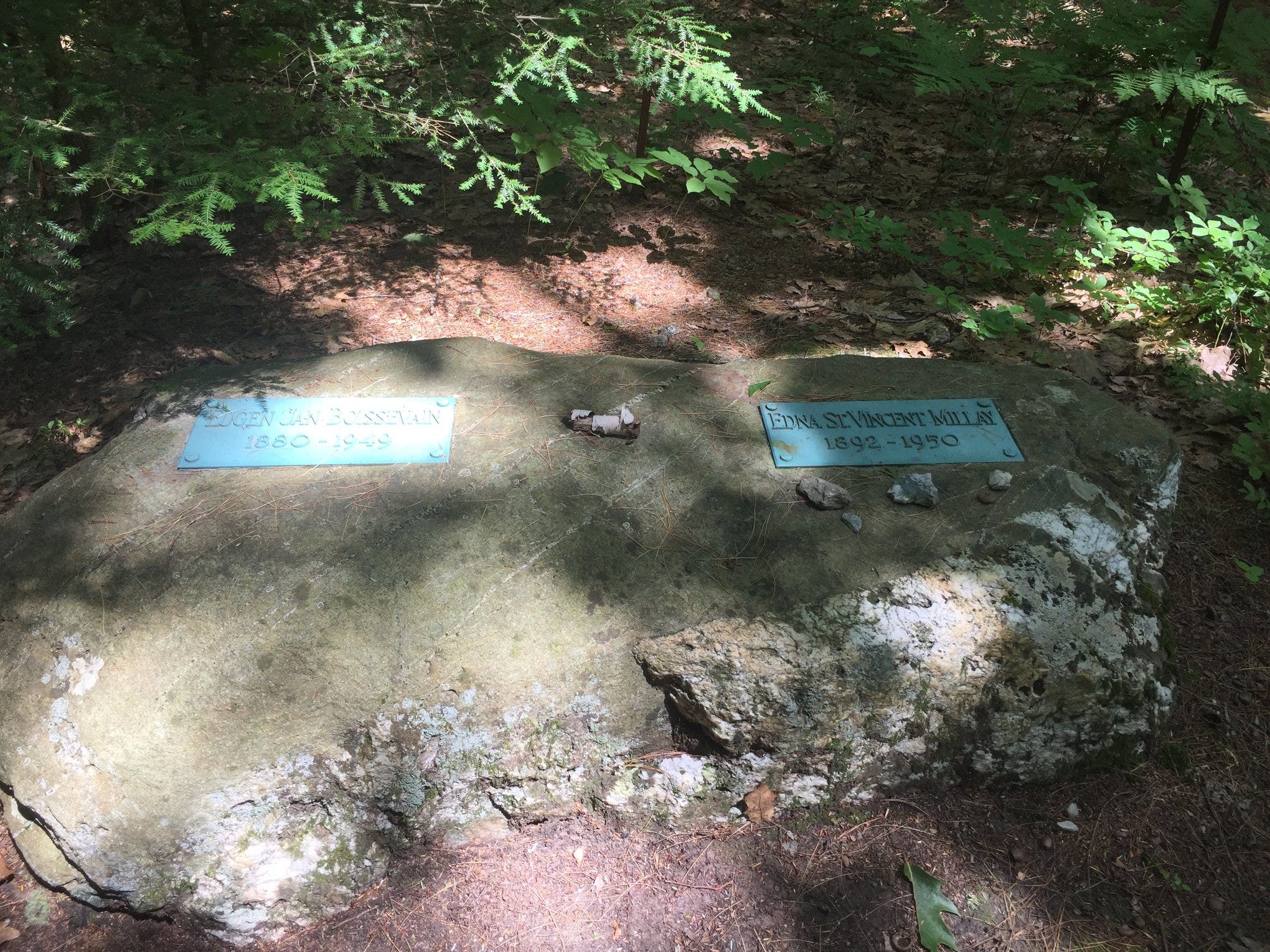
The property is also home to three graves, because after all, as Vincent wrote: “death comes in a day or two.” Cora, Vincent’s mother (who was also a fairly unusual woman for her time, shown in a portrait in the house with a pixie cut), is buried in the woods about a mile from the house in a fenced rectangle that’s (deliberately, as per Vincent’s wishes) overgrown with mountain laurels. A few steps away, Eugen and Vincent are laid to rest beside each other, and in another part of the same glen, her sister Norma and her husband Charles Ellis.
The special day I attended at Steepletop included a reading of a selection of Vincent’s poetry, including one poem that had not yet been published. The readings were beautiful and funny and sad. They made us laugh and cry, as Vincent always does.
A few favorites from those read that day:
“Only until this cigarette is ended,”
“I, being born a woman and distressed,”
“Loving you less than life, a little less,”
“It is the fashion now to wave aside,”
Childhood is the Kingdom Where Nobody Dies,
and, of course, one of my lifelong favorites, “Love is not all.”
There is something ethereal about the way the sun dapples the leaves on the Poetry Trail and in the way small magic seems scattered about the gardens, the house, the writing cabin. Each turn you take at Steepletop reveals a new surprise. Spending the day there felt like living alongside the laughing fae spirit of Vincent herself, in a place that feels just like her poetry.
Today, Steepletop usually opens for 2-3 weekends each summer. You can find out when on their website at millay.org.